Creating a well-organized home workspace can make a big difference in how productive and comfortable you feel throughout the day. Whether you’re working remotely full-time or tackling personal projects, having a tidy, functional area helps minimize distractions and keeps you focused. In this post, we’ll explore straightforward tips to organize your home workspace so it supports your work habits and well-being.
Why Organizing Your Workspace Matters
A cluttered, disorganized workspace can hinder your ability to concentrate and increase stress levels. Conversely, an organized area can improve workflow, reduce time wasted looking for supplies, and help maintain a clear mind. Comfort also plays a key role — a well-arranged desk paired with ergonomic furniture supports better posture and reduces fatigue.
Start with Decluttering: Clear Surfaces, Clear Mind
A good starting point is to declutter your desk and surrounding area. Remove anything that doesn’t relate to your current work. Consider cleaning off your desk completely, then only place the essentials back.
Steps to Declutter Efficiently:
– Sort items into categories: Keep, discard, or relocate.
– Limit items to daily necessities: Pens, notepads, computer, and chargers.
– Find homes for papers: Use trays, folders, or filing boxes to organize documents.
– Digitize when possible: Scan important papers and store them electronically to reduce paper clutter.
Arrange Your Desk for Function and Comfort
How your desk is organized affects how smoothly your day runs. Prioritize positioning items based on how frequently you use them.
Desk Organization Tips:
– Keep frequently used tools within arm’s reach.
– Use drawer organizers or small containers for tiny items like paper clips and sticky notes.
– Dedicate a spot for your technology—chargers, mouse, external drives—to keep cords untangled.
– Incorporate a small lamp or ensure your workspace has adequate lighting, reducing eye strain.
Use Storage Solutions to Stay Neat
Storage doesn’t have to be bulky or ugly. There are many stylish and functional options to keep supplies tidy.
Ideas to Improve Storage:
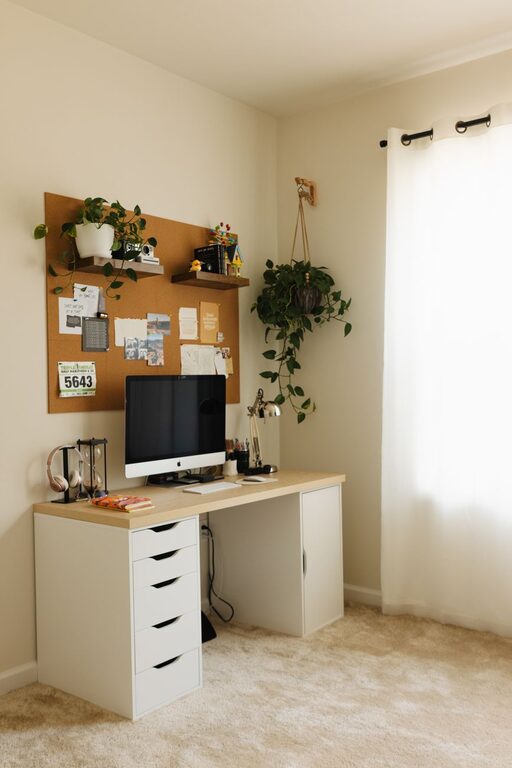
– Wall shelves can free up desk space while keeping materials accessible.
– Multi-tiered desk organizers help separate papers or notebooks.
– Under-desk carts provide extra storage without cluttering your floor.
– Cable management tools such as clips and sleeves tidy up wires and chargers.
Personalize Without Overcrowding
Adding personal touches like plants, photos, or artwork makes your workspace inviting and motivating. Just be careful not to overcrowd your area with too many decorations.
Simple Ways to Personalize:
– Place a small, low-maintenance plant on your desk for a touch of greenery.
– Use motivational quotes or framed photos positioned out of direct workspace zones.
– Choose calming colors for desk accessories or wall art to promote a relaxed atmosphere.
Prioritize Ergonomics for Long-Term Comfort
Spending hours at your desk means comfort and health should be a top priority. An ergonomic setup can prevent aches and improve focus.
Ergonomic Tips:
– Invest in an adjustable chair with lumbar support.
– Position your monitor at eye level and about an arm’s length away.
– Keep your keyboard and mouse at a height where your elbows are bent at about 90 degrees.
– Use a footrest if your feet do not rest comfortably on the floor.
Maintain Your Organized Workspace Daily
Organization is an ongoing process. Dedicate a few minutes each day to tidy your workspace so mess doesn’t accumulate again.
Daily Maintenance Routine:
– Clear your desk before finishing work.
– File away loose papers and put supplies back in place.
– Wipe surfaces to remove dust and crumbs.
– Review your to-do list and keep it visible to stay on track.
Create Zones if Space Allows
If you have a larger room or area dedicated to your workspace, consider dividing it into zones for different activities.
Example Zones:
– A primary desk area for computer work.
– A small table or corner for writing, drawing, or brainstorming.
– A filing and supply zone with storage cabinets or shelves.
This helps mentally separate tasks and keeps specific materials in designated places.
—
Organizing your home workspace doesn’t require expensive tools or complete renovations. Simple, practical changes can greatly enhance both your productivity and comfort. By decluttering, arranging your desk efficiently, incorporating smart storage, personalizing your space thoughtfully, prioritizing ergonomics, and maintaining your setup daily, you’ll create an environment that supports your best work.
Try implementing a few of these tips today to enjoy a more focused, pleasant home office experience. Happy organizing!
About the Author